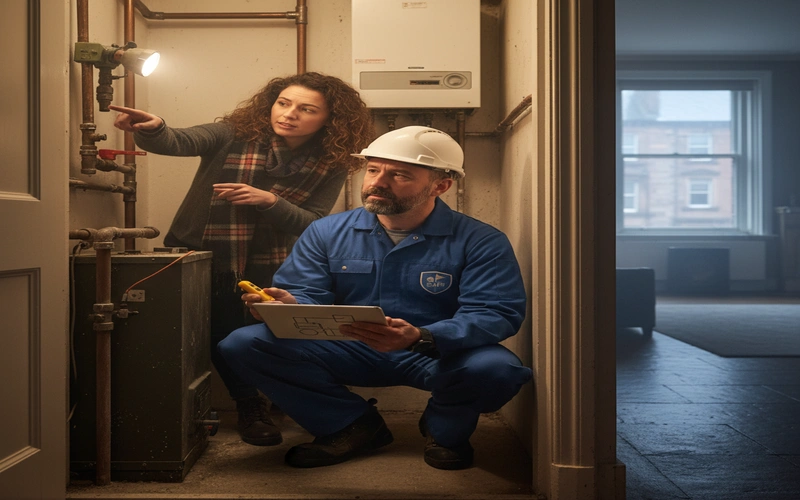
Combi System and Electric Boiler Installation Guide
Choosing between combi, system, and electric boilers represents one of the most important decisions homeowners face when replacing heating equipment. Each boiler type offers distinct advantages and limitations affecting installation costs, running expenses, hot water delivery, and property suitability. Understanding the differences between these heating systems helps Glasgow residents select appropriate technology matching their household size, hot water requirements, available fuel connections, and property characteristics. Professional Gas Safe engineers assess individual circumstances providing tailored recommendations ensuring installed systems deliver optimal performance and value throughout their operational lifespan.
Boiler Type Characteristics
Combi boilers heat water on demand as taps are opened, eliminating storage tanks and providing unlimited hot water at reduced flow rates suitable for properties with 1-2 bathrooms. System boilers heat and store water in cylinders allowing simultaneous use across multiple outlets, ideal for larger homes with 3+ bathrooms and higher occupancy. Electric boilers use resistance heating or heat pumps without requiring gas connections, perfect for off-gas properties but typically more expensive to run despite 99-100% efficiency at point of use. Each technology involves different installation requirements affecting complexity, duration, and overall project costs.
- Combi boilers save space by eliminating hot water cylinders and cold water tanks ideal for smaller properties
- System boilers provide stored hot water enabling multiple showers or baths to run simultaneously without pressure loss
- Electric boilers suit properties without mains gas connections offering clean operation with no flue requirements
- Installation costs vary with combi boilers typically least expensive and system boilers requiring additional cylinder work
- Running costs depend on fuel prices with natural gas usually cheaper than electricity per kilowatt hour

Performance and Cost Comparison
Evaluating boiler types requires considering both upfront installation expenses and long-term operational costs:
| Boiler Type | Installation Cost | Annual Running Cost |
|---|---|---|
| Combi Boiler | £1,800-£3,000 | £600-£900 |
| System Boiler | £2,200-£3,800 | £650-£950 |
| Electric Combi | £1,500-£2,500 | £1,200-£1,800 |
"Selecting appropriate boiler technology requires balancing installation costs against long-term performance—while electric boilers offer convenient installation, natural gas systems typically deliver lower running costs for most Glasgow households."
Installation Requirements and Property Suitability
Combi boiler installations suit flats, terraced houses, and smaller semi-detached properties where space is limited and hot water demands remain modest. These systems require adequate gas supply pressure and appropriate flue routing, with wall-hung models freeing floor space for other purposes. System boiler installations fit larger detached and semi-detached family homes where multiple bathrooms operate simultaneously and cylinder storage space is available, typically in airing cupboards or loft spaces. Electric boiler installations work best in rural properties, conservation areas prohibiting flues, or flats with restricted gas access, though electrical supply capacity must support heating loads typically 12-15kW for smaller properties. Gas Safe engineers conduct thorough surveys assessing existing infrastructure, hot water usage patterns, and property characteristics before recommending specific boiler types ensuring installed systems match household requirements and deliver reliable long-term performance.